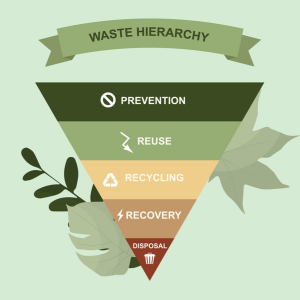
You’ll often hear the phrase ‘waste hierarchy’ when people talk about recycling, sustainability or reducing waste. But what does it actually mean? And how does it apply to everyday life?
Put simply, it’s a way of ranking waste options from best to worst for the environment – from avoiding waste being created in the first place, to dealing with it once it’s already there. In practice, that might mean buying less, reusing items for longer, or choosing products designed to last or be repaired.
And that’s why it matters. The further down the hierarchy you go, the more energy, emissions and resources are usually involved. Recycling still requires processing. Disposal sits right at the bottom. When you understand that order, everyday decisions about waste suddenly make more sense.
You don’t need technical knowledge to understand the concept, just a bit of practical thinking. And the best way to get to grips with it isn’t through long explanations – it’s by applying it to real-world situations.
Which brings us neatly to the quiz below.
It’s quick, useful and designed to test your understanding. No lectures. No judgement. Just a clearer picture of how the waste hierarchy works in everyday life.
How did you do?
90–100%
Hierarchy-savvy
You know when recycling is good, when reuse is better, and when the best move is avoiding waste altogether.
70–80%
Pretty clued-up
You know your stuff, even if a few questions made you pause and mutter “well… it depends”.
50–60%
Nearly there
You care, you try, and you recycle with enthusiasm. The hierarchy just threw a few curveballs.
0–40%
Just starting out
The waste hierarchy isn’t exactly common knowledge yet, so this is a perfectly respectable score.